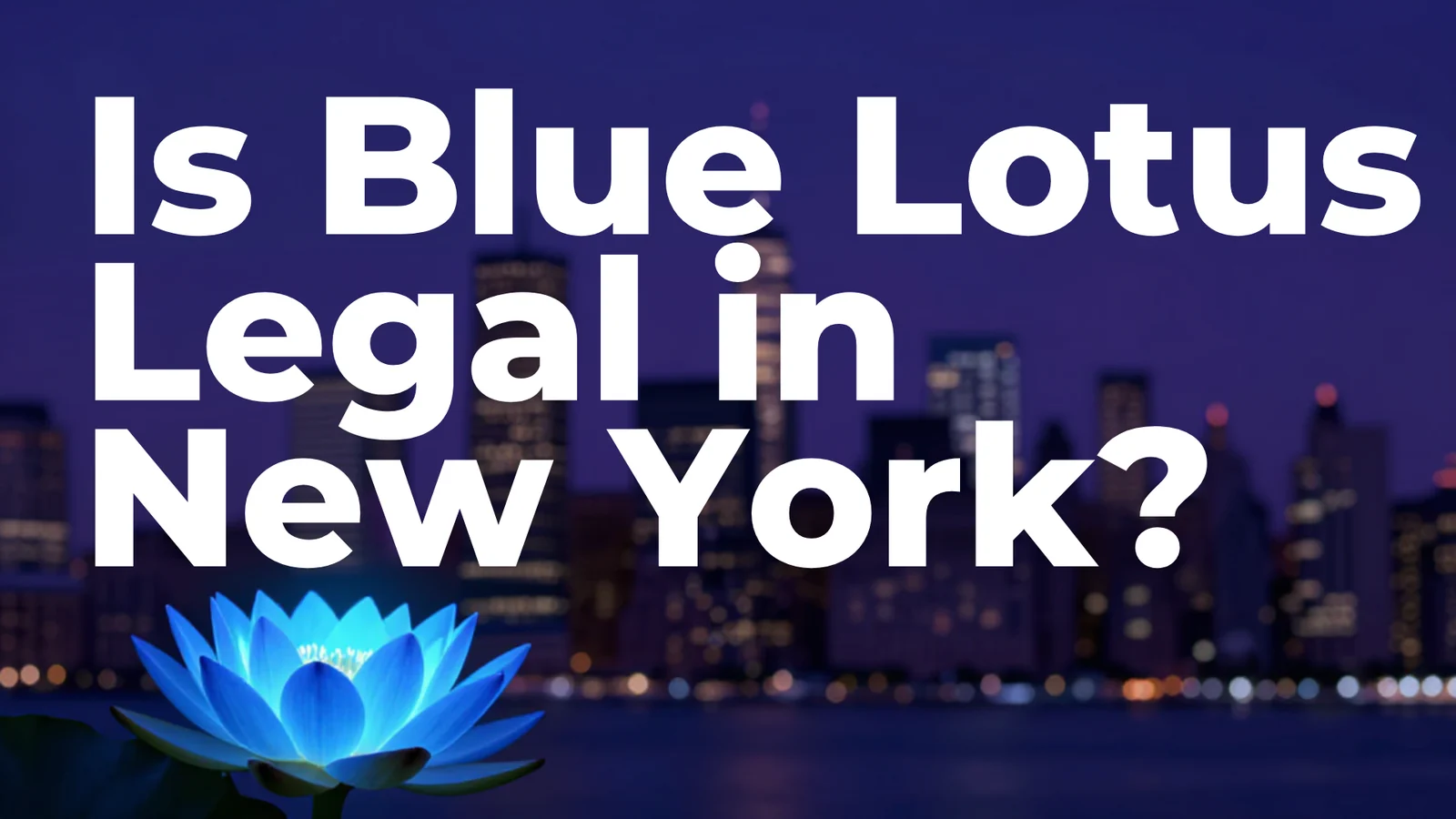
Yes, blue lotus appears to be legal in New York at this time. It is not federally scheduled as a controlled substance, and there is no clear New York-specific ban that names blue lotus as illegal.
That said, legal does not always mean simple. Blue lotus is one of those botanicals that creates a lot of confusion because it sits in an unusual spot. It is sold in many places across the U.S., but it is also not approved by the FDA for human consumption, and certain groups, including U.S. service members, are not allowed to use it.
So for New York shoppers, the real answer is this: blue lotus is generally available, but you still want to buy from a brand that is transparent about what it sells and how it is marketed.
What Is Blue Lotus?
Blue lotus, also known as Nymphaea caerulea, is an aquatic plant historically associated with ancient Egypt. It is often talked about in modern herbal spaces for its calming, dreamy, or mood-shifting reputation. The plant is commonly sold in forms like dried flower, extracts, vapes, and pre-roll style products, depending on the brand and the market.
A lot of online interest around blue lotus comes from people looking for something different from the usual herbal products. That is one reason search terms like “is blue lotus legal in new york” and “where can I buy blue lotus in new york” keep growing. People are curious, but they also want to make sure they are not buying something banned.
How Is Blue Lotus Legal in New York?
Blue lotus is legal in New York for the simple reason that no law specifically makes it illegal.
At the federal level, Nymphaea caerulea is not listed as a controlled substance. It does not appear in the federal drug schedules, so there is no national prohibition on possessing or selling the plant itself.
At the state level, New York Public Health Law Article 33 sets out the substances New York treats as controlled. Blue lotus is not named in those schedules. Nothing in New York law singles the plant out the way a handful of other states have done.
When a plant is absent from both the federal schedules and the state schedules, it generally remains legal to buy and possess. That is the position blue lotus is in for New York shoppers today.
Why Is There Confusion About Blue Lotus Laws?
New York runs one of the most actively regulated hemp and cannabinoid markets in the country through the Office of Cannabis Management. The state has moved aggressively on intoxicating hemp products, and that enforcement energy makes New York shoppers assume every botanical is swept up in the same rules. Blue lotus is not named in those cannabinoid regulations, because it is not a cannabinoid product at all.
There is a second source of confusion, and it is the more important one. Blue lotus is not FDA-approved for human consumption. The FDA has not evaluated it as a food or dietary ingredient, which is why reputable brands do not market it as something to eat or drink.
People often hear “not FDA-approved” and translate it to “illegal.” Those are two different statements. Not approved for consumption means it has not been through the FDA's process. Illegal would mean a law prohibits it. Blue lotus is the first, not the second.
New York City shoppers in particular see a lot of smoke shop inventory that mixes hemp, kratom, and botanical products on the same shelf. Sharing a shelf is not the same as sharing a legal category.
Is Blue Lotus a Controlled Substance in New York?
No. Blue lotus is not currently listed as a controlled substance in New York.
New York Public Health Law Article 33 is the reference point here, and blue lotus does not appear on it. It is also absent from the federal schedules maintained by the DEA.
This is worth stating plainly because a lot of online content blurs blue lotus together with substances that genuinely are scheduled. Being unfamiliar is not the same as being controlled.
Is There a Legal Limit for Blue Lotus in New York?
There is no New York possession limit, purchase cap, or milligram threshold written into law for blue lotus, because the state has not written blue lotus into its drug laws at all.
What you will run into instead are retailer policies. Most reputable sellers, including Lost Blue, apply a 21+ age requirement of their own. That is a business decision made in the absence of a statutory age limit, not a legal one imposed by New York.
You may also see quantity limits at checkout. Those are inventory and shipping decisions, not legal restrictions.
Can You Buy Blue Lotus Online in New York?
Yes. New York shoppers can order blue lotus online, and for most people that is the more practical route.
Local availability is inconsistent. Blue lotus turns up in some smoke shops and botanical stores, but the quality and labeling vary widely, and staff often cannot tell you where the flower was sourced. Ordering from a brand that specializes in blue lotus removes that guesswork.
Shipping into New York is straightforward, since there is no state rule restricting blue lotus from entering.
Where Is Blue Lotus Illegal?
Louisiana is the exception people miss. Louisiana Act 159, passed in 2005, restricts a list of plants including Nymphaea caerulea when they are intended for human consumption. Louisiana is the clearest example of a state carving blue lotus out specifically.
Outside of that, blue lotus is broadly available across the United States. But state laws change, and a plant that is unscheduled today can be scheduled tomorrow. If you are reading this well after it was published, it is worth confirming that New York has not updated its schedules.
Is Blue Lotus Legal for Military Members in New York?
No, and this is the biggest exception in this guide.
Operation Supplement Safety (OPSS), the Department of Defense's supplement education program, lists blue lotus on the DoD Prohibited Dietary Supplement Ingredients List. It is prohibited for use by service members and other DoD personnel.
That means civilian state law and military rules are not the same thing. A regular New York shopper may be able to buy blue lotus legally, while a service member can still face consequences under military policy.
If you are in the military, on a base, subject to DoD rules, or covered by any kind of drug testing policy, blue lotus is not something to guess on.
Is Blue Lotus the Same as Cannabis?
No, blue lotus is not cannabis.
Blue lotus comes from Nymphaea caerulea, a water lily. Cannabis comes from the Cannabis plant. They are different plants, different categories, and different legal conversations.
This matters because a lot of people see blue lotus pre-rolls and assume they are the same as hemp or cannabis pre-rolls. They are not. A blue lotus pre-roll is built around blue lotus flower, not marijuana flower.
That is also why blue lotus legality is usually discussed separately from THC, hemp, marijuana, and New York cannabis laws.
Where Can I Buy Blue Lotus in New York?
New York shoppers looking for blue lotus have two realistic options: hunt through local shops with inconsistent inventory, or order online from a brand built around the plant.
Lost Blue offers blue lotus pre rolls you can order online, with a smoother and more convenient way to shop than digging through random listings.
Why New York Shoppers Prefer Lost Blue
New York shoppers want a brand that feels clear, trustworthy, and easy to buy from. That is where Lost Blue stands out.
Instead of forcing shoppers to sort through random listings or vague product pages, Lost Blue gives them a more direct option with blue lotus pre rolls made for people who already know what they are looking for. The experience feels cleaner, the shopping process feels easier, and the brand speaks directly to people who want something different from the usual market.
New York buyers also appreciate convenience and confidence. When someone searches for blue lotus in New York, they are usually trying to answer two things fast: can I buy this, and where can I get it from a brand I actually trust? Lost Blue helps answer both.
This article is general information about New York law as of the date of publication and is not legal advice. Laws change. Blue lotus is not approved by the FDA for human consumption, and this content makes no health or medical claims.